Garden News April 2026

- Treekeepers of Washington County programs
- Tualatin River Keepers Earth Day Fair
- Cedar Mill Garden Club
- OSU Master Gardener programs
- Spring weed alert! Garlic mustard
- Before you dig or trim
Treekeepers of Washington County programs
We work to protect and advocate for trees in urban unincorporated Washington County. Don’t miss our upcoming events! All events are free. Visit the Treekeepers website to learn more.
Tree walk: Fanno Creek at Garden Home
Saturday, April 11, 10-11:30 am, 7475 SW Oleson Rd, free
Walk along the Fanno Creek Trail while identifying and learning about trees with Garden Home’s Barb Stroud. This event is in partnership with the Garden Home Community Library. Open to all ages, but participants must be able to walk about two miles. We will gather at 9:45 am at the Northeast corner of the parking lot, and the walk will start promptly at 10 am. Space is limited; registration required.
Meet Tigard’s next heritage trees
Saturday, April 18, 1-4 pm, 10860 SW Meadowbrook Drive, Tigard’s Summerfield Estates, free
Drop in to see a pair of majestic trees that Tigard’s City Council is about to vote on for Heritage Trees status. Learn their historical significance and the importance of large urban trees, info on Treekeepers, Backyard Habitat, and TWIG grants. Those wanting to see more trees can walk or drive nearby to a Heritage monkey puzzle tree and/or a sequoia planted in 1938. Please only park in spaces marked “Visitor.”
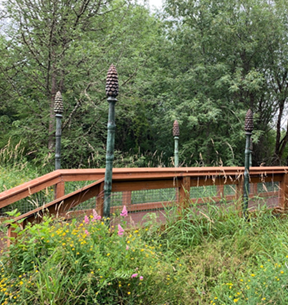
Tree walk: Dirksen Nature Park
Sunday, April 26, 12-2 pm, Dirksen Nature Park, free
Join Liz Saufley for a Treekeepers’ Tree Walk at Tigard’s Dirksen Nature Park. This 48-acre park offers a mature forest with many trees well over 100 years old, a view of the wetlands, and is home to many wildlife species. This walk will introduce what Dirksen Nature Park has to offer for the community and natural play areas for children.
Register for the walk here.

Tree walk: Hoyt Arboretum
Thursday, April 30, 10-noon, Hoyt Arboretum, free
Join Sue Rosenbaum to experience spring blooms around Hoyt Arboretum. We’ll start at the Visitor Center with a little background on the Arboretum and its mission, then walk through the oaks and beeches before arriving at our nationally recognized Magnolia collection. After spending some time among the magnolias, we’ll explore the flowering plants of the Rosaceae family and finish with a visit to the viewpoint for a glimpse of Mt. St. Helens and then return to the visitor center.
The tour will occur rain or shine. Dress for the weather and wear comfortable shoes for walking on well-graded packed dirt or gravel trails. We’ll walk about a mile over the course of 2 hours. Register now, as space is limited.

Tualatin River Keepers Earth Day Fair
Saturday, April 18, 11675 SW Hazelbrook Rd, Tualatin
Celebrate Earth Day with the Riverkeepers! We’ll have opportunities to paddle the Tualatin River, learn about native plants, and meet our local partners.
Cedar Mill Garden Club
Wednesday, April 15, 11-noon, Beaverton City Library, free
Cedar Mill Garden Club welcomes Master Gardener Kris LaMar for her presentation on Vegetable Gardening at our April meeting. The presentation begins at 11 am. Non-member drop-ins are welcome! For more information, please email cathyramsey308@gmail.com.
OSU Master Gardener programs
Basics of plant propagation
Saturday, April 18, 10-noon, 8005 SW Grabhorn Rd, free
Learn how to make more of the plants you love using samples we’ll take from selected plants in our Learning Garden. OSU Extension MG Volunteers Karen Anderson and Cindy Muir will show some of the basics of plant propagation. During this hands-on session, you’ll make new plants and take them home. We’ll provide the necessary supplies but bring your favorite small pruners and gloves if you’d like.
Drought resistant landscaping (MCS)
Tuesday, April 7, 7-8 pm, online via Zoom, free
An introduction to drought tolerant Xeriscape design for the home gardener. Learn through the seven principles of Xeriscape how to plan, design, implement, and maintain a decorative and sustainable landscape that thrives with little to no irrigation. Pre-registration is required. Presented by: Geoff Puryear, OSU Extension MG Volunteer and Administrative Office Manager for OSU Extension Service Douglas County.
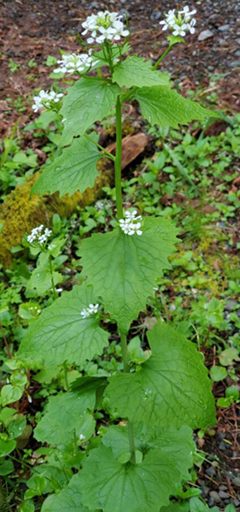
Spring weed alert! Garlic mustard
Garlic mustard may look harmless, but this fast-spreading invader is quietly reshaping our local forests and natural areas. Originally introduced from Europe for cooking, it has become one of the most ecologically disruptive plants in the Pacific Northwest.
You may wonder: why is it such a problem? Garlic mustard doesn’t just crowd out native plants. It releases chemicals into the soil that kill beneficial fungi that trees and shrubs need in order to grow. Over time, this weakens soil health, reduces plant diversity, limits wildlife food sources, and disrupts forest regeneration.
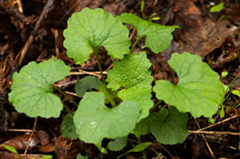
You’re most likely to spot garlic mustard along forest edges, trails, roadsides, pastures, streambanks, and even in backyards. In early spring, second-year plants send up 1 to 3-foot stems topped with small white flowers. Earlier in its life cycle, it forms low rosettes of rounded leaves close to the ground. Not sure? Crush a leaf—if it smells like garlic, you’ve found it!
If you see garlic mustard, act quickly. First-year plants can be pulled when soil is moist. Second-year plants must be removed before they set seed (typically by late April). Carefully pull the entire root, bag all plant material, and dispose of it in the trash—never compost. Learn more here.
Before you dig or trim
Spring is a great time to dig in—literally. If you’re planting, trimming or tackling yard projects, it helps to keep safety in mind. Knowing where power lines are and when to call for help can prevent outages and injuries. Learn more from PGE.