Garden & Nature News July 2026
- Treekeepers of Washington County
- Get wildfire ready this summer at free workshops
- Water-Wise tips from Dennis’ 7 Dees
Treekeepers of Washington County
We work to protect and advocate for trees in urban unincorporated Washington County. Don’t miss our upcoming events! All events are free. Visit the Treekeepers website to learn more.
Tree walk: St. Andrews Woods & Wetlands
Saturday, July 11, 10-noon, St. Andrews Lutheran Church, 12405 SW Butner Rd, Beaverton
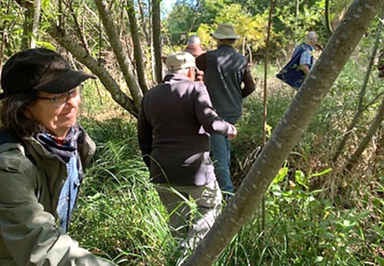
Don Nearhood will be leading us on an exploration of the acreage behind the church where they have eight acres of riparian forest and wetland. We will follow Johnson Creek, then wander off the beaten path to explore the wetlands and woods. There are some small logs to step over or duck under and a small creek to scamper across. We will returnalong the established wood-chipped trail to their Sanctuary of the Firs and the beaver dams on the east side of the property. Come and see what a dedicated group of volunteers can do to restore nature and create a peaceful refuge for both humans and wildlife. Register for the walk here.
Get wildfire ready this summer at free workshops
Saturday, August 29, 8:45 am-1:15 pm, Tryon Creek State Natural Area, 11321 SW Terwilliger Blvd.
Saturday, September 19, 8:30 am-3:15 pm, Skyline Grange, 11275 NW Skyline Blvd.
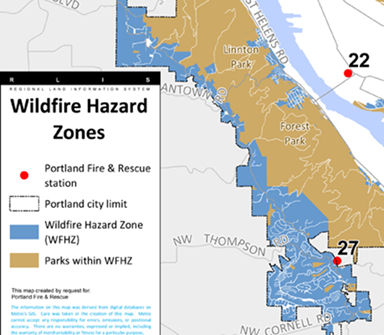
West Multnomah Soil & Water Conservation District (WMSWCD) invites you to join wildfire experts, local conservationists, and your neighbors at two upcoming free Wildfire Ready events. Both offer three interactive sessions from experts on how to increase the chance of your family and your home surviving a wildfire, and how to improve the resiliency of your property and community. Pre-registration is required and can be found at at the WMSWCD website..
Local fire experts and emergency agencies are helping to co-lead these events and teach these workshops, including Portland Fire & Rescue, Oregon State Fire Marshal, Multnomah County Office of Emergency Management and others. Both events will include tabling sessions with even more resources and chances to ask questions.
Increase your safety margin in a fire—invite a neighbor to join you! Register now to claim your spot.

Water-Wise tips from Dennis’ 7 Dees
Article condensed and edited from information by Andrea Melnychenko.
With increasingly hot weather becoming a consistent feature of Pacific Northwest summers, there’s never been a better time to explore water-wise gardening practices. From selecting drought-tolerant plants and increasing planting density, to finding new ways to water more efficiently, the fundamental ideas that make up water-wise gardening can be implemented in virtually any setting. Best of all, each water-wise gardening solution works individually, or you can piece them together to create a sustainable, low-water landscape!
Often called ‘Xeriscaping,’ water-wise gardening focuses on conserving water in the landscape through thoughtful plant and material selection and smart gardening practices. Whether you want to plant your new landscape to conserve water from the start or take your existing garden in a more drought-tolerant direction, these are the best practices for setting up your garden to use less water.
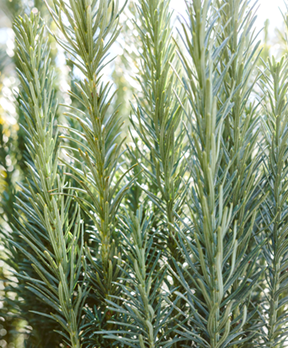
with aromatic foliage. Photo credit
Kaitlyn Green and 7Dees
Drought-tolerant plants can withstand warm temperatures and intense sun without requiring excessive water usage. Though a number of mechanisms contribute to drought tolerance in plants, there are a few key characteristics to look for: Hairy or Grey Leaves; Thick, Succulent Leaves; Waxy Coating on Leaves; Feathery, Fine-Cut Foliage; Aromatic Foliage; Deep Taproots. Native plants that are climate-adapted to the Pacific Northwest and grow in full sun environments make excellent choices for water-wise gardens. For more recommendations on drought-tolerant plants, review our curated list of the 7 Best Drought Tolerant Plants!
Plant Layout & Design: In order to use water efficiently in the landscape, plants should be grouped together rather than planted with blank spaces. Planting densely helps create specific zones where water should be used and minimizes the amount of blank soil where water can evaporate. Group plants with similar needs so water can be distributed throughout the garden in a more effective manner, and certain zones can be prioritized over others depending on the time of year. Increase the density of planting to establish a “living mulch” effect, reducing overall water evaporation as well as weed growth. Create a layered garden with trees, shrubs, perennials, grasses, and groundcovers to provide shade to each layer and increase humidity within the immediate area. Add more veggies to raised beds than the seed packets or plant labels recommend to increase productivity and reduce water usage.
Mulching to Conserve Water in the Landscape: Mulch, whether from bark, compost, gravel, or groundcover plants, is one of the most effective ways to reduce the amount of water that is lost from gardens when they are watered. Pacific Northwest gardeners are often faced with heavy clay soil that holds water in the wet season, but repels water in the hot, dry summer, making mulch in summer all the more necessary. Use compost as mulch to improve soil and plant health. Compost improves the water-holding capacity of soil alongside the texture, microbial life, aeration, and drainage. Select types of mulch based on design aesthetic: gravel will give your low-water landscape a Mediterranean or Modern look; wood chips and softer groundcovers help emphasize a Cottage or Bohemian style; bark or hazelnut shells are an excellent top dressing for Traditional or PNW gardens. Keep mulch 2-4 inches away from the trunk or base of plants for ideal plant health, and use mounded mulch around the dripline to keep water in place.
Watering Strategies for Low-Water Landscapes: Drought tolerant, water-wise and xeriscaped gardens are not water-free landscapes, they are low-water landscapes! Though they may be tough and tolerant of hot, dry, sunny environments, drought-tolerant plants still need water—they just use less water and are more efficient with it. Provide regular, deep watering on all new plantings to help establish deep roots and set them up for long-term success. Water deeply to encourage root growth and recharge the soil with water that roots can access during periods of heat. Water in the mornings to minimize plant stress and water loss from evaporation. Avoid frequent, shallow watering as this can cause root rot or lead to immature roots. Many drought-tolerant plants are particularly sensitive to soggy or constantly wet soil conditions, especially in heat.
Visit our blog for more tips on how to water your garden effectively!
Lawn Alternatives for Water-Wise Landscapes: Turfgrass is typically the most water-intensive part of any landscape and uses much more irrigation than planting beds. If your goal is to reduce your water usage in the landscape, look at ways to reduce or eliminate your lawn altogether. Reduce lawn area by expanding your planting beds. Allow your lawn to go dormant in the summer. Switch to water-wise or clover-dominant lawn seed mixes. Remove lawns in favor of seating areas, water features, or more planting beds. Lawns, especially in areas where they are unused, can easily be replaced with equally attractive and much more sustainable lawn-free landscape solutions. Visit Dennis’7 Dees to find locations and much more information. Photo credit Kaitlyn Green and 7Dees.