Local students raise and release salmon!
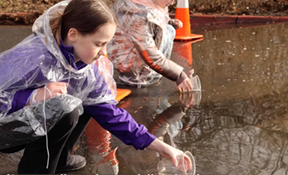
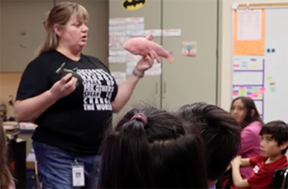
Jennifer Klingner is a fifth-grade teacher at Bonny Slope Elementary (BSE). When we first learned about the “Fish Eggs to Fry” project, she agreed to answer our questions. She began by saying, “This is actually a large unit that covers so many of our standards that it is challenging to describe. The salmon eggs and their release are really a culmination of lots of different parts coming together.” The project is supported by Clean Water Services, the Oregon Department of Fish and Wildlife (ODFW), and NW Steelheaders.
How did you hear about the program?
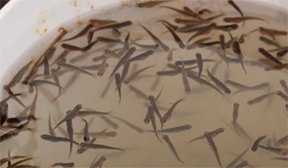
Back when Bonny Slope was a PYP (International Baccalaureate) school, we were tasked with creating units that integrated science and social studies content with reading, writing, and math, and empowering kids to make change in the world. When we started this unit, the science standards shifted in Oregon and fifth grade was now tasked with teaching ecosystems. A previous school I worked at had raised salmon eggs and turned it into a fabulous community building adventure each year for their students, and so I was inspired to start looking into how to get eggs and how to bring them to Bonny Slope. I think we have been doing this for seven or eight years. Our fourth and fifth graders have really been involved in this from the start and the fifth graders take full ownership of our Salmon Tank.”
Did you use any of the other classroom resources that are available from NW Steelheaders & ODFW?
We tend to lean on Clean Water Services the most. The Steelheaders are great about dropping the fish eggs off to us in the fall and they used to come in and talk with our classes, but that ended with the pandemic, background checks, and since then the participation in the program has increased, so they are a bit rushed, almost like Santa on Christmas Eve, to get all the eggs delivered. Initially, I participated in the ODFW training and was given a binder of resources that we could access and use in the classroom. We utilize some of it. But the majority of the unit is based on our science, math, reading, and writing targets. We are even able to integrate social studies with tribal stories of salmon and how this fish has shaped our local economy.
What levels of students can be involved?
We keep our tank out in the hallway by the fourth and fifth grade classrooms. Every student at Bonny Slope walks by it and many teachers will give their class time to make observations and take a look in the tank as the fish hatch and grow into fry. Fourth grade discusses salmon as part of their indigenous peoples education and when they take a trip to Bonneville dam later in the year to build on their science targets, they see the fish ladder and discuss what Bonneville has done to help the Salmon thrive.
There are several other local schools that participate, including Terra Linda third graders, . I am not sure how other schools handle this project, but BSE’s fifth grade teachers are all nature lovers and wanted to make this as relevant as possible for students. We launch the unit by gathering water samples from local water sources—rivers, lakes, and the ocean. We don’t tell the kids where the water is from, and as we learn about what salmon need to thrive, they try to decide which water sample is the best place to release our fry. They are given a milk jug of water, pictures from the collection site, and a temperature reading of the water when it was collected. The students use the visuals, and the chemistry tests for PH, nitrate, nitrite, ammonia, and salinity, and try to decide which water sample is the best place for salmon.

Are the reporting requirements a burden?
Not at all. It is really simple. We teach and train the students to test the chemical levels in the tank periodically, and they are responsible for reading the temperature and recording it each day. The kids are also really good at spotting eggs that may no longer be living or fry that have died, and we record the losses and remove them from the tank ASAP.
Have you released the fry yet?
We released them into the Tualatin River at Rood Bridge Park in Hillsboro. We get the eggs in October, and they are usually ready to be released around winter break.
Beaverton School District produced a video about this year’s project, you can view it here Jennifer is the first teacher to speak.
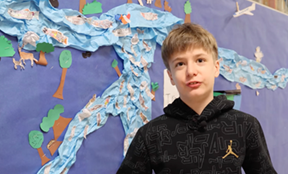
Corbin Jones described the river system map the students made to show how salmon travel in the Tualatin, Willamette, and Columbia rivers.