WCSO and federal immigration enforcement

By Virginia Bruce
With the huge national controversy over aggressive tactics on the part of Immigration and Customs Enforcement (ICE) and Customs and Border Protection (CBP) we wanted to look into how our Washington County Sheriff’s Office (WCSO) is handling interactions with those Homeland Security agencies. They shared information with us at the January CPO 1 meeting (link to YouTube recording, beginning around nine minutes in), and later we spoke with Sergeant DiPietro so we could bring you the facts. First, we want to explain Oregon’s Sanctuary Promise, which is the guidance that WCSO follows.
Sanctuary status
Between 12-17 states in the US have “sanctuary laws,” that in some way restrict how law enforcement cooperates with federal immigration enforcement. (The number varies because there’s no legal definition for the term.) From the Oregon Department of Justice page on Sanctuary, “As a sanctuary state since 1987, Oregon stands for the safety, dignity, and human rights of all Oregonians. Oregon was the first state in the nation to pass a statewide law stopping state and local police and government from helping federal authorities with immigration enforcement. In the ensuing decades, the law was updated several times.” Their website has more information including links to the laws.
Washington County, including its cities, the Sheriff’s Office, and the Washington County Law Enforcement Council, follows this law. The Law Enforcement Council has published a guide on how to identify the various local law enforcement personnel and a message about how they carry out the law. “We enforce state and local laws, not federal immigration policies. We do not collaborate with ICE, we do not participate in federal immigration enforcement, and we do not ask questions about immigration status. Oregon has been a Sanctuary State for nearly 40 years, and we are committed to upholding both the law and the values behind it: fairness, inclusion, and community trust.”
What are the limits of your interaction with federal law enforcement?
We have no authority over them, and we don’t dictate their tactics. We want a working relationship, but sanctuary means we don’t facilitate their apprehension activity unless there’s a warrant signed by judge (federal or local). We do not honor administrative warrants issued by ICE.
We can’t ask what they’re doing. When we are present at a situation, we are more in the role of observers. We are there to protect our community. We don’t know the mindset of the federal agents or who they’re going after. We don’t have background information on the individuals they target.

We know how to recognize excessive force. We had a specific training on it last fall, including on how to de-escalate. In some ways we are stuck in the middle.
Fortunately, at this point we have not seen situations like what occurred in Minneapolis, or even in downtown Portland, out here. The agitators seem to stay in Portland, and local protests are peaceful.
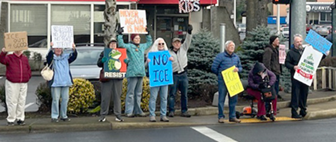
What do you want protesters to know about staying safe and legal?
Do not block ICE agents, either with vehicles or your person. They will do what they need to do to get out of the situation. Engaging in disorderly conduct, obstruction, or coercion can all lead to an escalation of a situation. Stay out of public streets and avoid private property. Don’t get legal advice from social media.
What should people do or not do if they are bystanders to a raid or other federal action? Should they contact you?
You should call law enforcement (911) if you suspect that someone is impersonating law enforcement or if you observe excessive force. We don’t need to be notified if a raid is going on as long as it seems legitimate and under control. We don’t need a call for every white SUV.
You don’t know if their target might be a violent individual. So observe and stay safe. Record if you feel it’s safe to do so and could be useful.
What should people do with images or video of the above? Do you want them sent to you?
If someone has a concern, go ahead and share it. Call non-emergency (503-629-0111) and tell us about it and we will let you know how to submit it. Video or photos need to be local to Washington County.
Anything else you want us to know about?
Be a good witness, but don’t get involved. We have problems with agitators, not with peaceful protestors—that’s everyone’s right under the First Amendment.
We regret that some people consider all law enforcement to be the enemy. It breaks down our relationship with the community that we have worked hard to build. Sanctuary status means that we don’t ask people about their immigration status when they call us for help. We want to continue to protect and serve our community. We don’t want domestic violence, traffic incidents, property crime, or anything else to go unreported because of fear of federal interference.
We also encourage anyone who is interested in learning more about any aspect of local law enforcement to contact us. While our current Community Academy class is full, our Public Affairs team is always willing to host safety classes, give tours, and answer questions about our job and the different roles we play in the community. We invite people to ask questions; we just ask you to give us the opportunity to answer.
For more information, please contact publicaffairs@washingtoncountyor.gov.