Hillsboro and Oregon are moving to limit data center growth
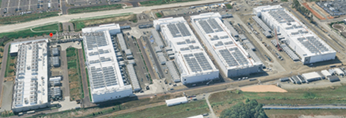
Data centers provide computing power for a range of companies. The big social media companies, Amazon and other online retailers, cloud storage companies like Adobe and Apple, along with internet providers and other data-intensive corporations need ever-increasing capacity, spurred by the rapidly expanding use of artificial intelligence (AI) for business and personal use. If you use Google to search for information, you’re using AI.
In May, The Oregonian reported that Hillsboro was using enterprise zone agreements to extend tax exemptions for large data centers before the state moratorium on tax breaks took effect in June. Critics argued that the agreements allow major corporations to avoid long-term property tax contributions while placing increasing strain on local infrastructure and resources. Property tax exemptions have traditionally been used to encourage employers to build or expand because they will provide jobs in an area. Many data centers employ ten or fewer people once construction is complete.
Community members have seen a sharp rise in electricity costs over the last five years: Both PGE and Pacific Power rates are up by 50% in that time. Both companies say rates have risen because they are increasing capacity to better serve customers, but it’s unclear how much of the increase serves the data center industry. One estimate puts PGE’s planned resource additions for data centers at around 26%. They recently got permission from the Public Utility Commission to increase the rate for data centers, but it’s not clear if that will lower rates for residential and small business customers. Data center critics also cite water use and resulting watershed pollution, along with the loss of agricultural land.
In July, the city adopted a four-month moratorium on approving new data centers and the high-capacity battery storage systems that supply power to the data centers. The action was taken with only a day’s notice so developers wouldn’t submit applications to beat the council vote. An updated fact sheet on the city’s website has more information.
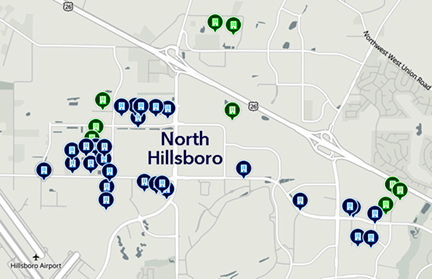
To get an idea of the current extent and use of data centers in Hillsboro, visit this interactive map and click on each symbol to see who owns it and select “View Profile” to see how it is used.

So why is Hillsboro in particular, and Oregon in general, such a hub for data center development? Oregon is among the top ten states in the US for housing the huge server farms.
One reason is that there are 16 high-capacity fiber cables on the Oregon coast that provide intercontinental connectivity. Oregon has only charged an application fee of $5,000 for companies to install them. The Oregon Lands department has proposed new compensation fees that could bring millions to the state. As Oregon governor Kotek recently noted, Oregon has been a “cheap date.” In addition, Hillsboro is one of just two places on the West Coast where landing stations bring the cables even further inland.
Tax incentives, an educated workforce, and plentiful water and electricity also contribute to the boom. Some facilities can be located out in the rural and remote areas of Oregon, but proximity to users is a factor for many industries, including the medical and financial sectors that demand low “latency,” the time between a signal being sent and received.
As long as demand for data storage and distribution continues to grow, data centers will continue to proliferate. Some research is being done toward alternatives but nothing groundbreaking seems to be on the horizon. With Hillsboro in particular and Oregon in general being such a desirable location, making developers pay for exploiting our advantages may be our best hope.